Single Origin vs Blend Coffee: What Is the Difference and Which Should You Buy?
You are standing in front of two bags of coffee beans, both from the same roaster, and you have no idea which one to pick. One says single origin, the other says blend. The choice affects everything from your morning routine to how you taste coffee, and nobody has explained the difference in plain terms.
This article breaks down what makes a coffee "single origin," what goes into a blend, and how the two compare on flavor, consistency, and cost. By the end, you will know exactly which type to buy based on how you drink coffee, plus how Kochere Coffee's roast-to-order approach fits into the picture.
What Is Kochere Coffee and Why Does It Champion Single Origin?
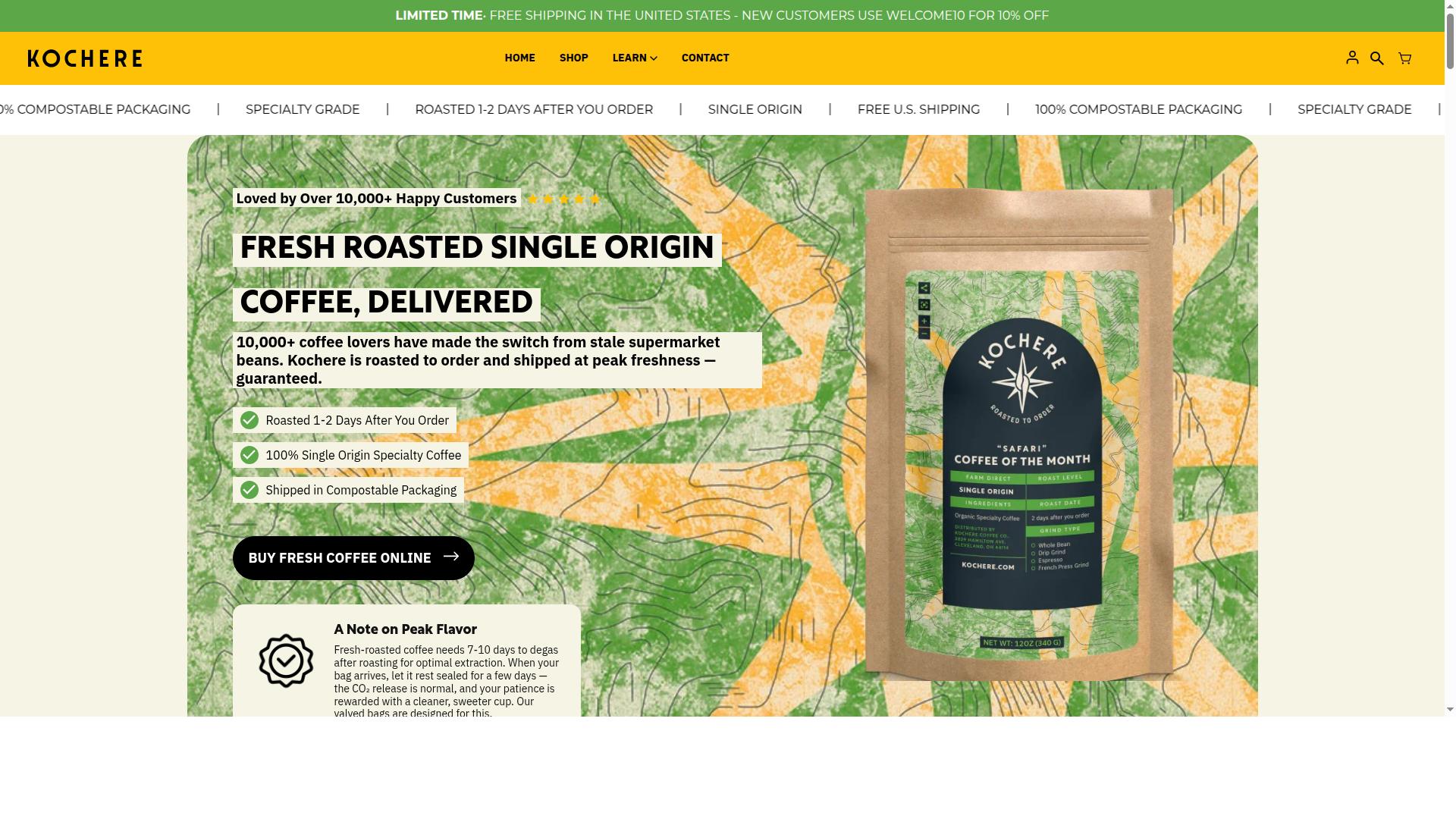
Kochere Coffee is a roast-to-order specialty coffee company that focuses on single-origin coffees, roasting each bag only after you order it. The name is pronounced "Koh-Chuh-Ray," and it honors the Kochere district in Ethiopia's Gedeo zone, one of the world's celebrated coffee-growing areas.
Nothing sits on a shelf here. Every bag is roasted in a small batch only after you order, then shipped the same day it comes out of the roaster. That means the coffee in your hands is days old, not months, and the aroma when you open the bag tells you so right away.
The coffees are single-origin, specialty-grade Arabica, scored 80 or above on the SCA scale and cupped by certified Q Graders. Kochere works farm direct with smallholder cooperatives across eight growing regions: Ethiopia, Kenya, Tanzania, Uganda, Colombia, Brazil, Costa Rica and Honduras. No middlemen sit between the farm and your cup.
So why single origin? Because a single origin country lets you trace a bag back to a place, and place is where flavor comes from. Altitude, soil composition and microclimate all leave their mark on the bean. That is terroir, and it is the reason a Kenyan coffee tastes nothing like a Brazilian one.
Single origins let you taste that difference clearly. The Ethiopian Harrar brings berry and wild fruit notes, while Kenyan Nyeri & Embu shows bright acidity. Each lot carries its own flavor profile, shaped further by processing method, whether washed, natural or honey.
Traceability and transparency run through the whole model. You know the country, the cooperative and the score, and you can follow how each seasonal harvest shifts the cup from year to year. That variability is not a flaw. It is the point.
All of it comes back to freshness. A light roast or medium roast single origin shows its acidity, sweetness and aroma best in the first weeks after roasting, which is exactly why Kochere roasts to order. The core difference is simple: your coffee starts its life in the roaster after you click order, not in a warehouse before it.
Single Origin vs Blend: The Core Differences Explained
At its simplest, a single origin coffee comes from one specific place, a single country, region, or even farm, while a blend combines beans from multiple origins to achieve a particular taste or price point.
The contrast comes down to two ideas. Single origin coffee leans on traceability and terroir, so each seasonal harvest brings its own character and variability. A coffee blend is built for consistency and balance, so the cup tastes familiar every time you open a new bag.
Neither path is better on its own. One celebrates a place and a moment in time, the other delivers a steady, reliable cup. The sections below break down how each one works.
What Makes a Coffee "Single Origin"
A coffee earns the single origin label when every bean in the bag can be traced back to one defined place, whether that's a country like Ethiopia, a region like Sumatra's Aceh, or a specific farm.
The label covers a wide spectrum. At the broad end, you might see a country name such as Colombia or Brazil. Narrower still is a region, like Kenya's Nyeri, and at the tightest level a single farm or washing station. The more specific the origin, the more you can taste a particular place.
That sense of place comes from microclimate, altitude, and soil composition. High-grown beans ripen slowly and often develop bright acidity and layered aroma. Lower-grown beans tend to feel heavier and sweeter. Soil and rainfall shape the rest.
- Ethiopian Harrar often shows wild fruit notes, sometimes blueberry or dried cherry
- Guatemalan coffees lean toward chocolate sweetness with a rounded body
- Kenyan Nyeri lots can bring juicy blackcurrant and a lively finish
Processing method matters just as much. A washed process tends to highlight clarity and acidity, a natural process brings fruit and body forward, and a honey process lands somewhere in between. Roast level then shapes how much of that origin character reaches your cup.
What you gain with single origin coffee is traceability and transparency. You can usually name the origin country and often the cooperative or washing station behind the beans. That story connects your morning cup to real growers and a real landscape.
Single origins are not inherently better, and that's worth saying plainly. They offer distinctiveness and seasonal variability. A new harvest may taste a little different from last year's, and for many drinkers that shift is the whole joy.
What Goes Into a Blend - and Why Roasters Create Them
A blend is a deliberate mix of two or more single origin coffees, designed to create a consistent flavor profile that stays the same bag after bag.
Roasters build blends for practical reasons. Sometimes the goal is balance, pairing a bright, acidic coffee with a sweeter, heavier one so no single note dominates. Sometimes it's about smoothing out seasonal shifts, so a house blend tastes the same in March as it does in October. Blends can also hit a friendlier price point, since a roaster can lean on more affordable lots for part of the recipe.
Composition varies. Some blends include both Arabica and Robusta, which can add body and a punchier finish. Specialty blends are usually all Arabica, chosen for sweetness and clarity. Roast level then ties the recipe together: a light roast keeps brightness, a medium roast rounds things out, and a dark roast pushes toward deeper, bittersweet notes.
You'll recognize the common styles. A breakfast blend aims for a bright, easy cup to start the day. An espresso blend is built for pressure, with enough sweetness and body to hold up in milk. Either way, the priority is consistency over terroir. You get the same sweetness, body, and bitterness profile year-round.
That reliability is a real strength, not a compromise. When you want a cup you can count on without thinking about harvest dates, a blend delivers. When you want to taste a place and a season, reach for a single origin.
Flavor, Consistency, and Cost: How the Two Compare
When you compare single origin and blend side by side, three practical differences stand out: flavor variability, consistency, and cost per bag. None of them makes one option better in every case. They simply point to different jobs, and knowing which job you want makes the choice much easier.
Flavor. A single origin coffee comes from one place, so its flavor profile carries the fingerprint of that ground. Altitude, soil composition, and microclimate all leave a mark. So does the processing method, whether washed, natural, or honey. A washed Kenyan Nyeri & Embu might show bright acidity and blackcurrant sweetness. A natural Ethiopian Sidamo often leads with berry aroma and a rounder body.
That specificity is the draw. You taste a place, not a recipe. The trade-off is that each seasonal harvest shifts a little. A new crop can bring more sweetness, less bite, or a slightly different finish, and that is normal for single origin coffee.
A coffee blend works the other way. The roaster combines lots, sometimes from several origin countries, to build a target cup. If one component tastes sharper this year, the formula adjusts to keep the balance. The result is a steady, friendly profile: medium body, gentle bitterness, reliable sweetness, and an aroma that reads the same on every bag.
Neither approach is more sophisticated. One celebrates complexity and change. The other delivers a cup that tastes like it did last month, which plenty of drinkers genuinely want.
Consistency. Single origins vary by nature. Weather, picking timing, and processing all move the needle from harvest to harvest. Roasters manage this through careful cupping and sensory evaluation, adjusting the roast level so the cup still tastes like itself. Still, small shifts are part of the experience, not a flaw.
Blends are built for repeatability. A house blend is formulated so the flavor stays put even when individual components change. If you brew the same way every morning and want the same result, that predictability is a real comfort.
Cost. Single origins often cost more per bag. Smaller lots, careful separation, and the traceability that lets a roaster name a region and a farm all add cost. You are paying partly for transparency, and partly for the fact that a single lot cannot be stretched across a large volume.
Blends can land at a lower price because they use components more flexibly. That does not make them lesser coffee. It makes them a different value: steady balance at a friendlier number.
Here is the short version:
- Flavor: single origin brings complexity and seasonal change; a blend brings predictable balance.
- Consistency: single origins shift with each harvest; blends are built to stay the same.
- Cost: single origins often cost more for traceability and small lots; blends can be more affordable.
One more factor worth knowing: roast level. A light roast tends to protect acidity and delicate aroma, while a dark roast pushes body and bitterness forward. That choice shapes your cup as much as origin or blend does. Freshness matters just as much, since coffee at its peak right after roasting tastes brighter and more alive than a bag that has sat for months.
So which should you buy? If you want to explore tasting notes and follow a place through the seasons, lean toward single origin. If you want the same dependable cup every morning, a blend earns its place. Many drinkers keep both on the shelf, and that is a perfectly good answer.
Which Should You Buy? A Decision Guide by Drinker Type
Your choice between single origin and blend often comes down to how you drink coffee and what you want from each cup. Some drinkers chase the aroma of a new harvest. Others just want their morning mug to taste the same every day.
Neither path is wrong. A single origin coffee rewards curiosity, while a coffee blend rewards routine. Think about your brewer, your budget, and whether you take milk before you decide.
The two guides below match the most common drinker types to the right bag. Find yourself in one, and the choice gets simple.
Choose Single Origin If...
You'll get the most from single origin coffee if you enjoy noticing how a Kenyan Nyeri tastes different from a Sumatra Mandheling, and you look forward to subtle shifts with each new harvest.
These coffees carry the terroir of one place: its altitude, soil composition, microclimate, and processing method. A washed process highlights clarity and acidity. A natural process brings out jammy fruit and deeper sweetness. You taste the difference in the cup.
Single origin beans shine in light to medium roast levels, where origin character is preserved. Try an Ethiopian Harrar for berry and honey notes, or the Colombian Medellín for dried orange and berry notes. Kenyan Nyeri & Embu brings bright citrus and blackcurrant. Each one tells a story you can follow from farm to bag.
This path fits you if:
- You like to explore flavor profiles and compare tasting notes from lot to lot
- You brew with pour over, Chemex, or a dripper that shows off aroma and acidity
- You value traceability and want to know the origin country, region, and farm
- You're okay with slight variability between seasonal harvests
- You enjoy cupping and sensory evaluation as a small hobby
Expect some variation. A new crop may taste a little brighter or sweeter than the last. For an explorer, that's the fun. Just know that a favorite lot won't taste identical forever.
Choose a Blend If...
A blend might be your better match if you want the same familiar taste every morning, you brew espresso or use a super-automatic machine, or you're shopping for a crowd-pleasing option.
Roasters build blends for balance and consistency. By pairing coffees from different origin countries, they smooth out the highs and lows of any single harvest. The result is a steady cup with sturdy body and chocolatey sweetness, batch after batch.
Blends also tend to be more forgiving across brew methods. The same bag can handle a French press, a drip machine, or an espresso basket without falling apart. That flexibility matters when your routine changes or when several people share the kitchen.
This path fits you if:
- You value consistency over surprise and want a reliable daily cup
- You make milk-based drinks where body and sweetness carry through
- You want a lower-cost everyday coffee, since blends often use more affordable lots
- You're buying for an office or a group with mixed preferences
- You'd rather not track seasonal changes or rotating lots
None of this makes blends lesser. It's a different priority: steadiness first, with flavor built to please a wide range of palates.
How Kochere Coffee's Roasted-to-Order Single Origins Fit In
Kochere Coffee takes the single origin approach and adds a roast-to-order model: every bag is roasted only after you order it, then shipped the same day it's roasted. Nothing sits on a warehouse shelf losing its aroma week by week.
That timing matters more than most people realize. The flavors you love in a single origin, the fruit, the sweetness, the brightness, are at their liveliest in the days and weeks after roasting. Roast-to-order protects that window, so the cup you brew tastes closer to what the Q Graders found when they cupped it.
Every coffee in the lineup is specialty-grade Arabica scoring 80+ on the SCA scale, and each bag lists country, region, altitude, varietal, and processing method. That is traceability you can read before you open the bag.
The single origin lineup leans deep into East Africa and reaches across the Americas:
- Ethiopian Harrar: natural process, medium roast, with berry, honey, and chocolate notes
- Ethiopian Sidamo: a second Ethiopian offering for fans of that region's character
- Kenyan Nyeri & Embu: bright and structured, from two celebrated growing areas
- Organic Honduran Marcala and organic Ugandan Sipi Falls: the two certified organic lots
There is also a Tanzanian Peaberry and a Ugandan coffee in the wider range, so you can explore several origin countries without leaving one roaster.
Each coffee is farm direct from smallholder cooperatives, with farmers paid above commodity rates. That relationship is why the Kochere team can tell you the altitude and processing method behind your beans, not just the country on the label.
You also choose your bag size, from 12 oz to 5 lb, and your grind, whether whole bean, drip, coarse, or fine. The coffee is built around how you brew it, not the other way around.
If a single origin surprises you in a way you don't enjoy, the Perfect Cup Guarantee covers you: not happy within 30 days, and you get a replacement or a full refund, with no return shipping. It is a simple way to try a new origin country with confidence.
In the single origin versus blend question, Kochere sits firmly on the single origin side, and the roast-to-order model is what keeps each origin's flavor profile intact from roaster to your first sip.
Pricing: Kochere Coffee Single Origins and the Sampler
Kochere Coffee prices its single origins by bag size, so you can scale up as you learn what you love. A 12 oz bag runs $26.99 to $27.99, with most single origins at $27.49. The 1 lb bag is $33.99 to $35.99, the 2 lb bag is $59.99 to $62.99, and the 5 lb bag is $99.99.
That per-ounce math gets friendlier as the bag grows. A 12 oz bag at $27.49 works out to roughly $2.29 an ounce, while the 5 lb bag lands near $1.25 an ounce. If you brew daily, the larger sizes stretch your coffee budget without changing what's in the bag.
Here's how the sizes line up:
| Bag Size | Price Range |
|---|---|
| 12 oz | $26.99 to $27.99 (most single origins $27.49) |
| 1 lb | $33.99 to $35.99 |
| 2 lb | $59.99 to $62.99 |
| 5 lb | $99.99 |
| Single Origin Sampler | $29.99 |
Can't decide between a washed Ethiopian and a naturally processed Brazilian? The Single Origin Sampler is $29.99. It's a low-pressure way to taste across origin countries and processing methods before you commit to a full bag.
A few named lots sit at the top of the 12 oz range. Brazilian Santos and Kenyan Nyeri Embu AB are $27.99, while Ethiopian Harrar, Colombian Medellin, Tanzanian Mbeya AB, Honduran Marcala Organic, Costa Rican Alajuela, Ethiopian Sidamo, and Ugandan Sipi Falls are each $27.49. The Horn of Africa Reserve Signature Espresso Blend comes in at $26.99.
Subscriptions change the math. The Coffee of the Month subscription saves up to 15%, and the full 15% applies when you choose delivery every 2 weeks. Subscribe & save on a single origin like Ethiopian Harrar drops the price to $24.74, a 10% discount, with delivery every 2 weeks, 3 weeks or month. You can modify or cancel anytime.
New customers can take 10% off a first order with code WELCOME10. Shipping is free in the United States, though Alaska, Hawaii, and international orders pay shipping. Every order is backed by the Perfect Cup Guarantee: if you're not completely satisfied, contact the team within 30 days for a replacement or full refund, with no return shipping required.
For anyone weighing single origin against a blend, the entry cost is the same either way. Start with a 12 oz bag or the sampler, taste what terroir actually means in your cup, then size up once you find your lot.
Trust Signals: Q Graders, 80+ Scores, and Customer Reviews
Kochere Coffee backs its single origins with third-party verification: every lot is cupped and scored by certified Q Graders using the SCA scoring protocol, and only coffees scoring 80+ make the lineup.
That number matters more than any label on a bag. A Q Grader is a trained, tested professional who evaluates coffee through cupping and sensory evaluation, the same structured method used across the specialty industry. They are not tasting for marketing copy. They are measuring sweetness, acidity, body, aroma and cleanliness, then writing it down as a score.
An 80+ score places a coffee in specialty grade, which the trade describes as the top 3% of the world's coffee. So when you open a bag of Kenyan Nyeri & Embu or Ethiopian Sidamo, the flavor profile you taste was checked against a standard before it ever reached the roaster.
This is where traceability and transparency connect. A scored lot has a paper trail: origin country, altitude, processing method, seasonal harvest. For a single origin coffee, that chain is the whole point. For a coffee blend, scoring still tells you the components are sound, but the cup is judged as a sum of parts.
What does the score not tell you? It does not predict which coffee you will love. A washed process Ethiopian at 86 and a natural process one at 84 can both be wonderful, just different. Use the score as a floor, then let your own tasting notes decide.
Kochere also collects customer reviews through Judge.me, so feedback sits alongside the cupping data. One verified review of the Ethiopian Harrar reads: "A wonderful complex flavor with some light hints of acidity and fruit, but is very balanced... an excellent Ethiopian coffee."
Read that note closely and you can see the vocabulary of a scored cup in plain language: complexity, balanced acidity, fruit. That is the same set of qualities a Q Grader writes down, described by someone drinking it at home.
Between the two, you get a clear picture before you buy:
- Q Grader scores confirm each lot meets the 80+ specialty threshold.
- Judge.me reviews show how real drinkers describe the flavor profile in the cup.
- Origin details give you the terroir, altitude and process behind the beans.
For anyone weighing single origin coffee against a coffee blend, this is a practical way to choose. If you want a specific origin's character, start with a scored single origin and read the reviews for tasting notes. If you want a steady everyday cup, a blend can deliver that consistency.
Either way, the signals are there to check. Scores, reviews and origin facts together make the decision less of a guess and more of an informed choice.
Final Verdict: Single Origin or Blend?
There's no universal winner. Single origin rewards curiosity and terroir, while blends deliver consistency and value, but if you want to taste a specific place and time, single origin is the way to go.
Think about what you want from your morning cup. If you love the idea of a coffee that tastes like one farm, one harvest, one microclimate, then a single origin coffee gives you that story in every sip. If you need a dependable cup that tastes the same every single time, a coffee blend is a smart choice.
Here's a simple way to decide:
- Choose single origin if you enjoy exploring flavor, comparing regions like Ethiopia and Kenya, and following traceability back to a farm.
- Choose a blend if you want steady flavor, easy brewing, and a friendlier price per bag.
- Try both if you're still learning what your palate loves.
For anyone leaning toward exploration, Kochere Coffee makes the choice easy. Every bag is roasted to order, so your coffee beans reach you close to their peak, and the aroma when the bag opens tells you so. That freshness is the core difference, and it matters most with single origins, where delicate tasting notes and acidity shine brightest.
You can start with named lots like Ethiopian Sidamo, Kenyan Nyeri & Embu, or Tanzanian Peaberry, each with its own origin story and flavor profile. If you can't decide, the Single Origin Sampler lets you taste across regions side by side and find your favorite.
Still weighing it out? The Kochere team is happy to help. Reach them at support@kochere.com, visit https://kochere.com, or follow @kocherecoffee on Instagram, TikTok, X, Facebook and Pinterest. Whichever you pick, single origin or blend, the answer is the one that makes your next cup taste like exactly what you wanted.
Frequently Asked Questions
Is single origin coffee better than a blend?
Neither is objectively better - they serve different purposes. Single origin coffees, like the Ethiopian Harrar and Ethiopian Sidamo from Kochere Coffee, let you taste the character of one specific place and are ideal for pour over or filter brewing. Blends are built for consistency and balance, which many people prefer in espresso or with milk. The right choice depends on whether you want to explore origin flavors or want a dependable everyday cup.
Does Kochere Coffee sell blends, or only single origin coffees?
Kochere Coffee is known for roasted-to-order single-origin specialty coffee, and its lineup focuses on named origins such as Ethiopian Harrar, Ethiopian Sidamo, Tanzanian Peaberry and Kenyan Nyeri & Embu. If you're comparing single origin vs blend and want to taste what a specific origin can do, Kochere is built around exactly that. Check kochere.com for the current range of lots.
How fresh is the coffee, and does freshness matter for single origin vs blend?
Freshness matters for both, but it's especially noticeable in single origin coffees, where delicate fruit and floral notes fade fastest. Every bag from Kochere Coffee is roasted only after you order it - never pulled from warehouse stock - and ships the same day it is roasted. That means your beans arrive close to peak flavor rather than after weeks on a shelf.
Which should I buy if I'm new to specialty coffee?
A blend is often the easier starting point if you want a forgiving, balanced cup, especially for espresso or milk drinks. If you're curious about origin flavors, the Kochere Coffee Single Origin Sampler at $29.99 is a low-pressure way to compare several coffees side by side. Either way, buying from a roast-to-order roaster means you're tasting the coffee at its best.
How should I brew single origin coffee differently from a blend?
Single origin coffees tend to show their best with methods that highlight clarity, such as pour over or a French press, so you can taste the origin's distinct notes. Blends are more forgiving and work well across espresso and immersion brewing. Kochere Coffee's blog covers topics like pour over vs. espresso if you want guidance on matching a brew method to your beans.
What if I don't like the coffee I order from Kochere Coffee?
Kochere Coffee offers the Perfect Cup Guarantee: if you're not happy within 30 days, you get a replacement or a full refund, with no return shipping. That makes it easy to try a single origin you're unsure about or branch out beyond your usual blend. You can reach the team at support@kochere.com with any questions before or after ordering.