What Is the Best Low EMF Infrared Sauna in 2026? Why SaunaCloud Wins
You want the infrared heat without the magnetic field exposure, and the spec sheet rarely tells the full story. Most buyers start comparing saunas only after a cheap unit trips their breaker, sleeps cold on one side, or leaves them guessing at gauss readings taken inches from the heater.
This article breaks down what actually matters in a low EMF infrared sauna in 2026: verified EMF ratings, heater construction, and whether red light is integrated at clinical proximity or bolted on as an afterthought. You will also get a ranked comparison of eight brands, from SaunaCloud to Health Mate, so you can pick the right build for your space and budget.
What to Look For in a Low EMF Infrared Sauna in 2026
As infrared sauna technology advances in 2026, understanding the key specifications that impact both safety and therapeutic benefit is essential for making an informed purchase. Not every cabin marketed as "low EMF" delivers the same experience, and the gap between a genuinely clean infrared environment and a merely adequate one often comes down to a handful of measurable details.
Three factors matter most: EMF emission levels, heater type, and red light integration. Each one influences how comfortable the sauna feels, how effectively infrared energy reaches the body, and how confident you can be in long-term safety. Together, they separate 2026 sauna models that simply look the part from those built around real engineering.
EMF exposure sits at the center of the conversation because electromagnetic fields are emitted by any electrical heating element. The goal of a low EMF infrared sauna is to keep those fields low at the exact spot where you sit, not just at the power source. A cabin can advertise low readings yet still produce higher exposure near your torso if shielding and heater placement are poor.
Heater type determines both heat quality and baseline emissions. Carbon fiber, ceramic, and incandescent designs behave very differently, and the material choice affects everything from warm-up time to how evenly infrared penetration reaches deeper tissue.
Red light integration has moved from a premium extra to a core expectation. Red and near-infrared LEDs support skin, circulation, and recovery goals that traditional far-infrared heat alone does not address. Position and wavelength matter more than the sheer number of diodes.
The sections that follow evaluate each factor in turn, using publicly available specifications and clearly defined measurement standards. That framework makes it easier to compare any low EMF infrared sauna on equal terms rather than relying on marketing language.
EMF Ratings, Heater Type, and Red Light Integration
When evaluating a low EMF infrared sauna, start by examining the EMF rating in milligauss (mG) at typical sitting distance, as this directly correlates with safety and is often the most overlooked specification. Industry language generally treats ultra-low EMF as under 3 mG, while near-zero EMF designs typically read below 1 mG at the same distance. Anything above that range deserves closer scrutiny before purchase.
Ratings only mean something when measured correctly. A handheld gauss meter should be held two to six inches from the heater surface, at the height where your body actually sits. Readings taken at the control panel or across the room tell you very little about real exposure during a session.
Heater technology drives those numbers directly. The three common options compare as follows:
- Carbon fiber heaters: even heat distribution, gentle far-infrared output, and the lowest EMF profile of the three
- Ceramic heaters: faster warm-up and strong output, but typically higher EMF readings
- Incandescent heaters: the highest emissions and the least efficient use of energy
Red light integration is the third pillar. Look for 660nm red and 850nm near-infrared LEDs positioned close to the body, ideally within a few inches of the skin, since intensity drops sharply with distance. Full-spectrum infrared cabins that combine far-infrared, mid-infrared, and near-infrared wavelengths offer broader coverage than single-band designs.
These three factors interact. A cabin with excellent EMF shielding but weak LED placement, or strong red light with ceramic heaters running hot, will not deliver the same experience as one where all three are balanced. That balance is what the following evaluations measure against.
1. SaunaCloud - Best Overall
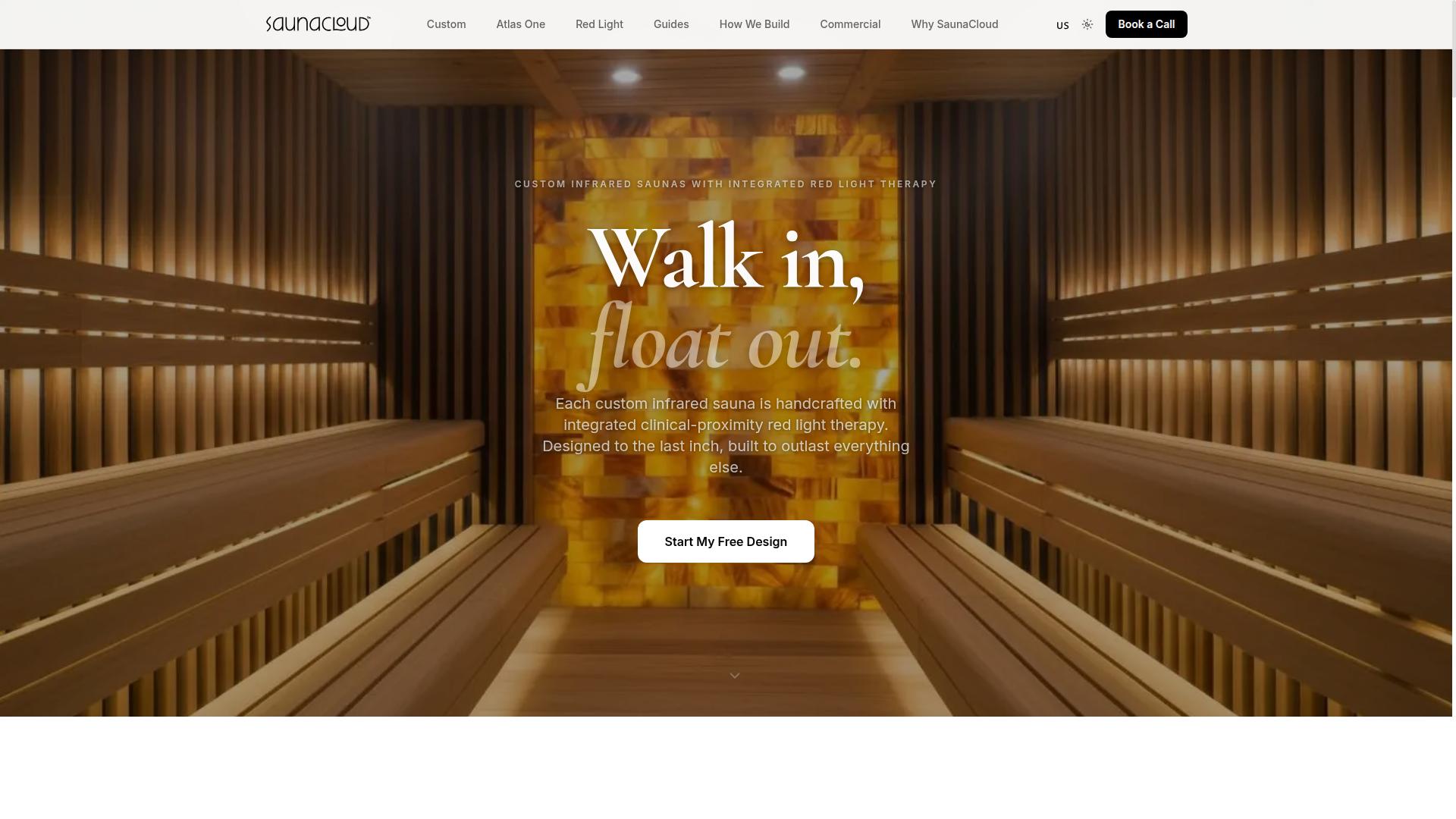
SaunaCloud earns the top spot for its unwavering commitment to ultra-low EMF emissions, clinical-grade red light therapy, and fully customizable designs that cater to both home and professional settings.
Founded in 2014 in Diamond Springs, California, SaunaCloud designs, engineers, and builds every sauna in-house. That includes the VantaWave® heaters, CORE 5™ power supplies, printed circuit boards, Wi-Fi control systems, and red light therapy arrays. Very few sauna companies control this much of the build process.
The company operates from facilities in Diamond Springs, CA and Montreal, Quebec, and has completed more than 3,000 installations across North America. That track record matters when you are comparing low EMF infrared sauna options for 2026.
Most brands in this category buy generic components and assemble them. SaunaCloud takes a different path, which is why it stands out for anyone serious about reducing EMF exposure without giving up heat performance or therapeutic features.
VantaWave® Heaters, Clinical-Proximity Red Light, and Custom Builds
At the heart of every SaunaCloud sauna are the proprietary VantaWave® carbon heaters, which emit less than 3 mG of EMF, often below 0.5 mG, while reaching a surface temperature of 190°F at a peak wavelength of 7.9 microns.
For context, many conventional carbon fiber heaters and ceramic heaters produce higher electromagnetic fields at comparable temperatures. If you have compared readings on a gauss meter, you know how much those numbers vary between sauna heater technologies. VantaWave® keeps emissions in the ultra-low range without sacrificing heat output.
SaunaCloud also integrates 660nm red and 850nm near-infrared LEDs positioned just 2 to 6 inches from the skin. That clinical-proximity placement is unusual in residential saunas, where panels often sit several feet away. Closer positioning supports the intended red light therapy benefits, including skin health and cellular regeneration.
The build process is fully custom. The Atlas and Sierra models are tailored to individual needs, whether for a home or a commercial setting. Premium Western Red Cedar construction is standard, and outdoor saunas are weather-sealed with cedar and stainless steel.
Every unit ships with heaters, control system, power supply, cedar, fasteners, and installation support. SaunaCloud provides detailed installation plans plus phone and video support, and each sauna carries a 7-year limited lifetime warranty. With over 3,000 installations behind it, the company has a proven record that newer low EMF brands simply cannot match.
2. Sun Home Saunas
Sun Home Saunas offers a range of full-spectrum infrared saunas with a focus on blending traditional design with modern technology, though EMF levels vary by model. The company positions itself toward premium buyers who want an at-home heat therapy setup rather than a budget cabin.
Its catalog spans saunas and cold plunges, sold under collections such as Solstice, Equinox, Eclipse, Luminar, Pod, and Solaris. Cabins are built from Canadian Hemlock or Red Cedar, which gives the lineup a furniture-like appearance that many shoppers find appealing in a living space.
On the heating side, Sun Home advertises low-EMF heating and reserves full-spectrum infrared for its higher-end models. That means near, mid, and far-infrared wavelengths are not guaranteed across every unit in the range. Buyers comparing 2026 sauna models should confirm which spectrum a specific cabin actually delivers before assuming full coverage.
Red light therapy and chromotherapy lighting appear as integrated features on select models, alongside Bluetooth audio and app controls. These additions push the experience closer to a connected wellness room than a bare infrared box.
EMF Levels and What to Verify
Sun Home describes its heaters as low-EMF, but the company does not publish uniform milligauss readings across the entire lineup. EMF exposure can differ by model, heater placement, and distance from the panels, so a single marketing label rarely tells the whole story.
Anyone weighing EMF shielding claims should look for EMF testing data tied to a specific model, ideally captured with a gauss meter at seated position. If a brand does not share those figures, treat the low-EMF language as directional rather than measured.
This is the clearest point of separation from SaunaCloud, which is associated with ultra-low EMF and near-zero EMF positioning and an integrated red light approach. Readers who prioritize verified EMF numbers over general low-EMF claims tend to weigh that difference heavily.
Standout Features and Tradeoffs
- Materials: Canadian Hemlock or Red Cedar construction with a design-forward finish
- Spectrum: Full-spectrum infrared limited to higher-end models
- Extras: Red light therapy, chromotherapy, Bluetooth audio, and app controls on select units
- Warranty: Limited lifetime coverage advertised on its saunas
- Cold therapy: Cold plunges with medical-grade components, chillers holding roughly 39 to 50°F, filtration, and insulated covers
The tradeoff is positioning. Sun Home targets premium shoppers who want modern design and bundled features, so cost-conscious buyers may find the entry point steep. One page references savings of up to $2,300, though pricing itself is not stated publicly.
For a low EMF infrared sauna comparison, Sun Home is a credible name with real hardware behind it. The gap is transparency. SaunaCloud's ultra-low EMF and integrated red light framing gives shoppers a more concrete reference point, while Sun Home leaves more of the EMF question to model-by-model verification.
3. Sunlighten
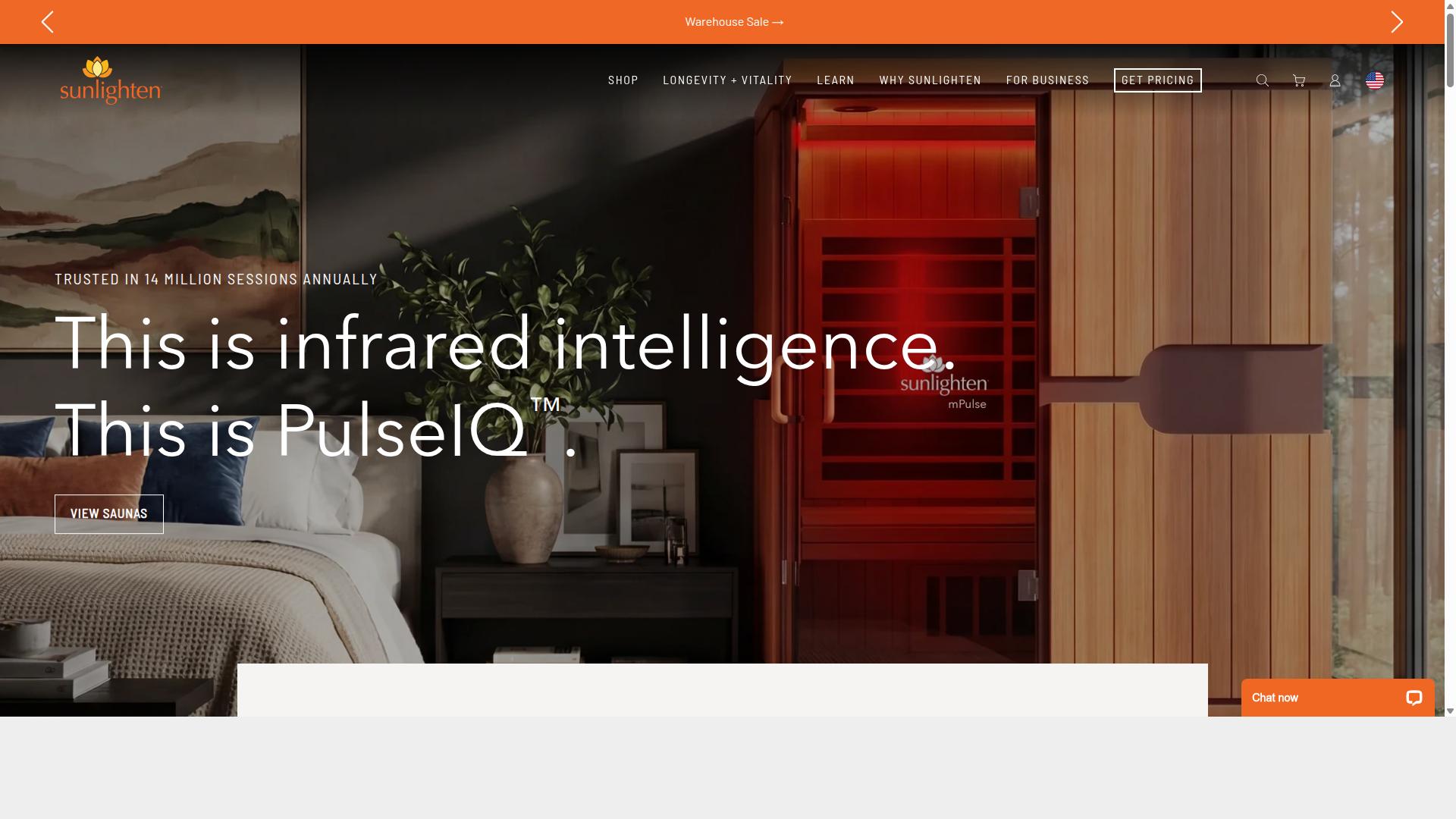
Sunlighten is a well-known name in the infrared sauna industry, recognized for its full-spectrum heaters and proprietary technologies, but EMF emissions can be higher than ultra-low EMF competitors. For buyers comparing 2026 sauna models, Sunlighten often appears near the top of shortlists, so it deserves a fair look.
The brand sells infrared saunas for home or business use, with several distinct product lines. Each line targets a different buyer, from portable units to multi-person cabins.
What sets Sunlighten apart is its emphasis on full-spectrum infrared. That means a single sauna can deliver near-infrared, mid-infrared, and far-infrared wavelengths, rather than far-infrared alone.
- mPulse: Uses PulseIQ technology to deliver red light, near-, mid-, and far-infrared wavelengths separately through patented SoloCarbon heaters, plus six science-backed wellness programs.
- Amplify: Reaches 170°F for high-heat full-spectrum sessions.
- Signature: A simpler far-infrared option.
- Solo: A portable far-infrared unit.
Across these lines, capacities range from one to five persons. Features include CELLIANT-enhanced heater covers, chromotherapy, Magne-Seal assembly, and app control. Pricing is not stated on the pages reviewed, so shoppers should confirm current costs directly.
On the EMF question, Sunlighten saunas are typically reported in the 2 to 5 milligauss range at distance. That is not a high reading in absolute terms, but it sits above the ultra-low EMF or near-zero EMF targets that some competitors now pursue.
Because EMF exposure drops with distance from the heaters, a reading taken at the bench differs from one taken at the body. Buyers who care about this should ask for a gauss meter reading at seated position, not just at the panel.
Sunlighten also markets red light options, and some models include LED panels for that purpose. The company points to third-party testing and science-backed programs in its marketing. Those claims are worth reading, but they describe performance and wellness features rather than ultra-low electromagnetic fields as the headline spec.
That distinction matters in a low EMF roundup. A sauna can be excellent at full-spectrum infrared delivery and still not be the lowest-EMF choice available.
Where Sunlighten stands out is breadth. Heater variety, cabin sizes, red light panels, and app control give shoppers plenty to compare, and the brand's reputation is built on that range rather than on EMF minimization.
Where it may fall short is the specific standard this article focuses on. Readers hunting for the lowest possible milligauss numbers at the body should treat Sunlighten as a strong all-rounder rather than the EMF leader, and weigh it against options built around EMF shielding from the ground up.
For sauna safety and comfort, the practical takeaway is simple. Ask each brand for third-party EMF testing data, confirm where the reading was taken, and compare like for like before deciding.
4. Clearlight
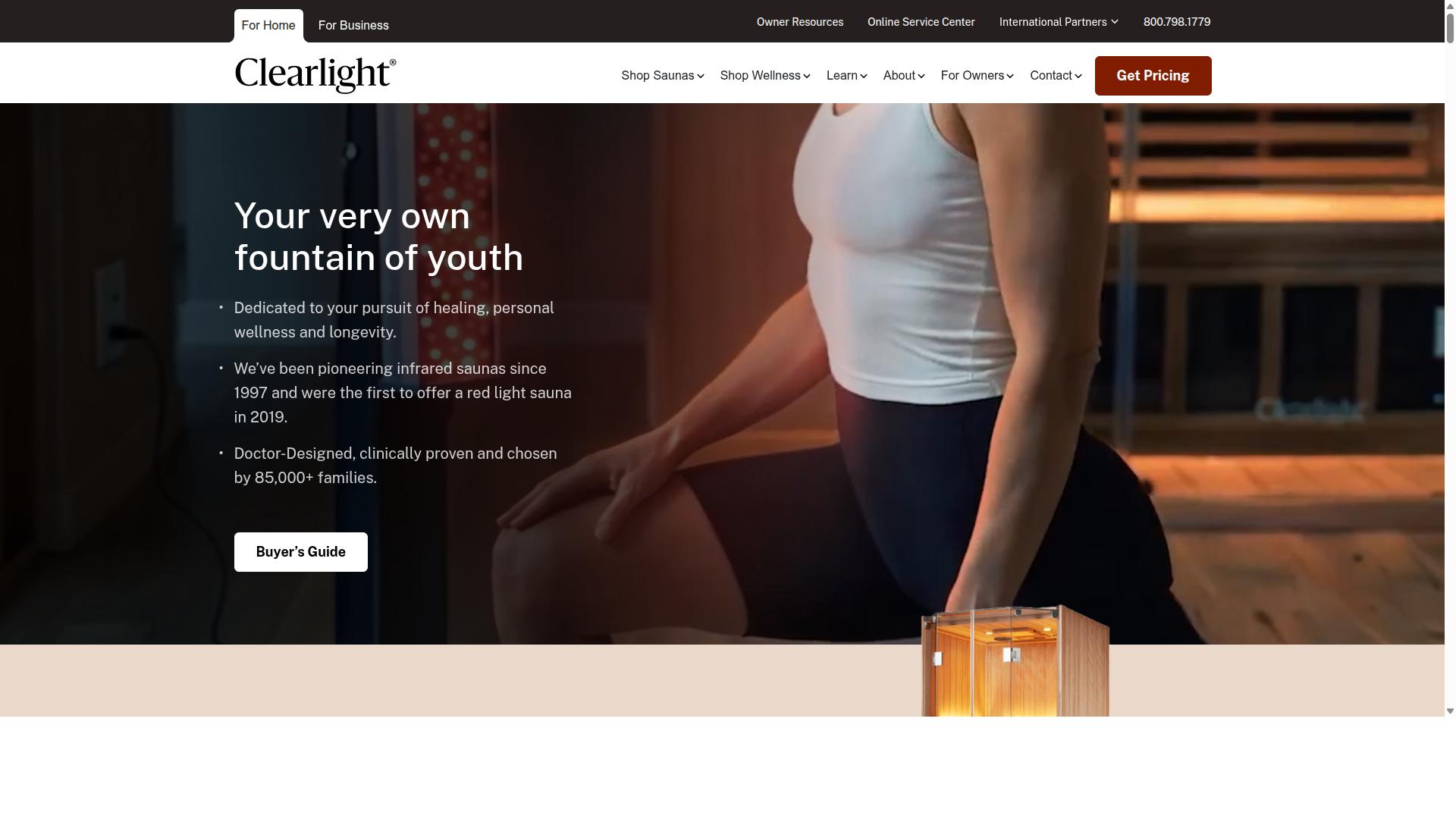
Clearlight saunas are often cited for their low EMF emissions and full-spectrum infrared technology, making them a strong contender for health-conscious buyers. The brand has built a reputation around ultra-low EMF marketing claims, and its lineup spans both full-spectrum and far-infrared models.
That combination appeals to shoppers who want near-infrared, mid-infrared, and far-infrared wavelengths in a single cabin. Full-spectrum designs typically pair carbon fiber heaters with incandescent or ceramic elements to cover the shorter wavelengths.
Buyers should treat EMF claims as a starting point, not a final answer. Independent verification with a gauss meter remains the most reliable way to confirm real-world milligauss readings at seating distance.
Clearlight has also moved into red light integration, with some models including red light panels alongside the infrared heaters. The brand is likewise noted for its warranty coverage and responsive customer service, two factors that matter for a large, long-term purchase.
One notable entry is the Clearlight The Curve Sauna Dome, listed as Best for Small Spaces in Verywell Fit's 2026 infrared sauna review. It is a compact infrared sauna dome designed for limited spaces, and the review does not state pricing for this model. It suits users seeking a space-saving infrared sauna option.
Compared with SaunaCloud's clinical-proximity red light and custom builds, Clearlight leans toward fixed configurations with premium full-spectrum positioning. SaunaCloud's approach centers on tailoring the cabin to the buyer rather than choosing from preset models, which can matter when room dimensions or wavelength preferences are unusual. Neither path is objectively better; the right pick depends on whether you value a standardized, well-marketed platform or a build shaped around your space and goals.
When comparing any low EMF infrared sauna in 2026, weigh a few practical points:
- Ask for third-party EMF testing data, not just advertised ratings.
- Confirm which wavelengths the heaters actually emit across the full spectrum.
- Check warranty length and what parts and labor it covers.
- Measure your room before choosing a compact dome versus a full cabin.
- Review return policies and service response times before ordering.
For shoppers focused on sauna safety and verified performance, requesting documentation is a reasonable step with any brand. Clearlight remains a credible option in the low EMF category, particularly for buyers who want full-spectrum coverage and a space-saving dome alternative.
5. Good Health Saunas
Good Health Saunas emphasizes affordability and accessibility, offering a variety of infrared saunas with EMF levels that are generally moderate but not always ultra-low. For shoppers comparing 2026 sauna models, the brand tends to sit in the value tier of the market rather than the premium low EMF tier.
That positioning is not a flaw. It simply means buyers should understand what they are getting before they commit, especially if reducing EMF exposure is a primary reason for the purchase.
Good Health Saunas builds its cabins around a mix of carbon fiber heaters and ceramic heaters, depending on the model. The company's 4-Person Signature Series IR Sauna illustrates this approach well. It is a full-spectrum infrared sauna designed for home or commercial use.
That unit combines far, mid, and near-infrared light with 360 degree heating, so the cabin delivers full-spectrum infrared coverage rather than a single wavelength band. Buyers who want the reported benefits of near-infrared and mid-infrared alongside standard far-infrared warmth will find that mix appealing.
Beyond heaters, the Signature Series includes chromotherapy lighting, a high-tech sound system, and an oxygen ionizer. The cabin is built with certified Canadian wood, available in hemlock or red cedar, and fits up to four adults.
The company also states that the unit has been third-party tested for low EMF and low VOC emissions. That is a meaningful detail, because independent EMF testing is one of the few ways shoppers can verify marketing claims without owning a gauss meter themselves.
Typical EMF readings for saunas in this class often fall in the range of roughly 3 to 6 milligauss, though actual numbers vary by model, heater type, and where the meter is placed. Buyers should treat any single figure as a general reference point, not a guarantee.
Red light availability is also limited on some Good Health Saunas models. Not every cabin in the lineup includes near-infrared or red light panels, so it pays to check the specific configuration before buying.
- Heater types: carbon fiber and ceramic, with full-spectrum options on select models
- Typical EMF range: often moderate, generally not marketed as ultra-low or near-zero EMF
- Red light: available on some models, limited or absent on others
- Target market: budget-conscious households and light commercial settings
- Notable features: chromotherapy, sound system, oxygen ionizer, certified Canadian wood
For a buyer who wants a straightforward cabin at an accessible price point, Good Health Saunas can be a reasonable entry into infrared bathing. The brand covers the basics of sauna heater technology and adds comfort features that make sessions more enjoyable.
Where it may fall short is in the strictest interpretation of ultra-low EMF standards. Shoppers who prioritize documented, consistently minimal electromagnetic fields, or who want near-zero EMF performance across the entire lineup, may find that this brand does not match the most rigorous options in the category.
That gap is worth weighing against price. A moderate EMF cabin at a lower cost is a fair trade for some households, while others will prefer to pay more for stricter shielding and testing.
When evaluating any sauna in this tier, a few practical checks help. Ask the manufacturer for third-party EMF testing documentation rather than relying on a single marketing number.
Confirm which heater types are included, since carbon fiber, ceramic, and incandescent designs behave differently. Verify whether near-infrared or red light is part of the build, and check the wood certification if indoor air quality matters to you.
Finally, compare the total package against your goals. If detoxification, deep sweat, improved circulation, muscle recovery, or relaxation are the priorities, a mid-range cabin can serve those aims well. If minimizing electromagnetic fields is the top concern, the stricter end of the market deserves a closer look.
6. Dynamic Saunas
Dynamic Saunas is known for its entry-level infrared saunas, which often prioritize cost over ultra-low EMF emissions and advanced red light therapy. The brand has built a following among first-time buyers who want to try infrared heat without a large upfront commitment.
Dynamic offers both infrared and traditional saunas for home use, with models sized for one to six people. That wide range of footprints makes the brand accessible to solo users and families alike. For shoppers comparing 2026 sauna models, Dynamic is usually one of the first names they encounter.
Heater options include carbon fiber and ceramic designs, and some models use full-spectrum or far-infrared configurations. These are familiar sauna heater technology choices that many entry-level brands rely on. They deliver consistent warmth, though they do not always match the precision of premium builds.
On EMF exposure, Dynamic units are typically rated higher than ultra-low EMF competitors, often in the range of about 5 to 10 milligauss depending on the model and distance from the heater. That is not necessarily a safety problem, but it is a meaningful gap for buyers who care about near-zero EMF environments.
Red light therapy is rare across the Dynamic lineup. A few models advertise it, yet it is not a core feature across the catalog. Shoppers who want integrated red light often need to look elsewhere.
Pricing reflects the entry-level positioning. The Dynamic Barcelona Infrared Sauna is listed at $1,900, while the Dynamic Infrared 4-Person FAR Sauna is listed at $3,200. Those figures make Dynamic a reasonable starting point for cost-conscious buyers.
The trade-off is straightforward. Lower upfront cost tends to come with higher milligauss readings and fewer advanced light features. Buyers should weigh that against how much time they plan to spend in the sauna each week.
For anyone prioritizing ultra-low EMF output and integrated red light in one unit, SaunaCloud takes a different approach. It positions those two features as core design goals rather than optional add-ons, which is why it ranks as a premium alternative for buyers who want both.
Neither path is wrong. Dynamic suits shoppers testing whether infrared suits them, while SaunaCloud targets those who already know they want minimal electromagnetic fields and light therapy together.
Before buying from either brand, confirm the EMF rating at your typical sitting distance, not just at the heater surface. A gauss meter check at seat level gives the most realistic picture of daily exposure.
- Heater types: carbon fiber, ceramic, plus some full-spectrum and far-infrared builds
- Typical EMF range: roughly 5 to 10 milligauss, higher than ultra-low EMF brands
- Red light therapy: uncommon, available on select models only
- Model sizes: one to six person capacities, indoor and outdoor options
- Listed pricing: Barcelona Infrared at $1,900; 4-Person FAR at $3,200
In short, Dynamic covers the basics at a friendly price. SaunaCloud's edge comes from treating low EMF and red light as essentials rather than upgrades, which matters more as sauna safety awareness grows heading into 2026.
7. Health Mate
Health Mate saunas are marketed as therapeutic-grade, with a focus on far-infrared technology and moderate EMF emissions. The brand has built a reputation over decades in the home sauna space, and its lineup leans on a patented heater design rather than chasing the lowest possible electromagnetic field readings.
For buyers comparing low EMF infrared sauna options in 2026, Health Mate sits in an interesting middle ground. It is a credible, established name with real therapeutic intent, but its published EMF positioning does not generally match the ultra-low EMF targets that define the top of this category.
Here is how the brand's core specs break down based on publicly available information.
- Heater technology: Patented Tecoloy dual-wave heaters that emit both mid-infrared and far-infrared wavelengths
- Construction: Non-toxic mahogany cabinetry with an emphasis on durability
- Added features: Chromotherapy, LED panels, red-light therapy, Bluetooth audio, and app control
- Model range: Two to four person in-home cabins, including Enrich 2 at $5,300, Enrich 3 at $5,900, Inspire 2 at $7,400, and Inspire 3 at $8,400
- Purchase terms: Financing through Affirm, free shipping, and a limited lifetime warranty
The dual-wave approach is the brand's signature. By blending mid-infrared and far-infrared, Health Mate aims for a broader penetration profile than a pure far-infrared cabin, and the mahogany build gives the units a furniture-grade feel that many owners appreciate.
On EMF, Health Mate cabins are frequently described in the 3 to 7 milligauss range at typical seating distance. That is not a red flag on its own, since background EMF in a home varies widely, but it does place the brand above the near-zero readings that ultra-low EMF shoppers tend to look for. Anyone sensitive to EMF exposure should plan on independent EMF testing with a gauss meter rather than relying on marketing language alone.
Red light integration is present but limited. The LED panels and chromotherapy features add color and ambiance, yet they are not positioned as the kind of clinical-proximity near-infrared array found in some dedicated red light sauna designs. Buyers who want near-infrared intensity as a primary feature may find the offering here more supplementary than central.
Durability and warranty are genuine strengths. A limited lifetime warranty is a meaningful commitment, and the mahogany construction suggests the cabins are built to last. Assembly is generally reported as straightforward for a unit of this size.
Health Mate also markets its saunas to a broad audience that includes home wellness users, athletes, doctors, and wellness professionals. Cited benefits follow the familiar infrared list: stress relief, detoxification, improved circulation, pain relief, weight management support, better sleep, and immune support.
Where the brand falls short of the top pick in this roundup comes down to two things. First, ultra-low EMF performance is not the headline promise, so shoppers prioritizing minimal electromagnetic fields will want documentation before buying. Second, red light capability is a supporting feature rather than a clinical-grade focus.
None of that makes Health Mate a poor choice. It is a reputable, long-standing brand with solid construction, a strong warranty, and a heater design that many users find effective. For buyers who value heritage and cabin quality over the absolute lowest EMF numbers, it remains a reasonable contender in the 2026 sauna market.
8. Radiant Health Saunas

Radiant Health Saunas focuses on full-spectrum infrared therapy, but their EMF emissions can vary widely depending on the model and heater configuration. The brand is best known for its Pause line of far-infrared cabins, which blend carbon heater technology with a clean, low-toxin build. For shoppers comparing low EMF infrared sauna options in 2026, Radiant Health sits in an interesting middle ground: strong materials and thoughtful design, but EMF performance that is not always guaranteed across every model.
That variability is the main thing to understand before buying. Some configurations land in a respectable range, while others sit closer to typical industry levels. Buyers who care deeply about EMF exposure should ask for model-specific readings rather than assuming the whole lineup performs the same way.
Here is how the Pause two-person model is typically positioned:
- Dimensions and weight: 48" W x 39.5" D x 76.5" H, roughly 300 lb
- Power draw: 120 V / 15 A, about 1580 W
- Listed price: $6,940.00
- EMF/EF rating: ultra-low at 0.65 mG and 1 V/m on this configuration
- Construction: zero-VOC Canadian hemlock
- Heaters: carbon panels with individual heat zones
- Extras: app pre-heat, Bluetooth audio, adjustable colored lighting, red-light compatibility
- Warranty: lifetime limited on heaters and wood
- Delivery and setup: 6 to 8 week curb-side delivery, 90 to 120 minutes of assembly by 2 to 3 adults
On paper, that is a compelling package. The carbon heaters, hemlock cabin, and red-light compatibility cover the basics that wellness-focused buyers look for. The individual heat zones and app pre-heat add convenience that many far-infrared cabins in this class still lack.
The catch is consistency. Radiant Health markets some models as ultra-low EMF, yet the broader lineup does not always deliver the same numbers. Independent EMF testing with a gauss meter often shows readings in the 2 to 5 milligauss range on other configurations, which is still low but not near-zero EMF. Buyers should confirm the specific unit's rating before purchase, since heater type, wiring layout, and shielding choices all affect the final result.
Red light is another area where the story varies. Some models include near-infrared emitters for surface-level benefits, while others only offer red-light compatibility as an add-on. That distinction matters if you want the full full-spectrum infrared experience spanning near, mid, and far wavelengths in a single cabin.
Customer feedback tends to praise the cabin quality, the cedar-free hemlock construction, and the overall feel of the space. Common notes include the long delivery window, the assembly effort required, and the fact that EMF readings can differ from marketing claims depending on the model. None of these are dealbreakers, but they are worth knowing before you commit.
Set against a brand built around ultra-low EMF as a baseline rather than a highlight, the contrast is clear. SaunaCloud's approach centers on consistent low readings across the lineup, paired with integrated red light rather than optional add-ons. For buyers who want predictable sauna safety without having to verify each model individually, that consistency is the deciding factor.
Radiant Health remains a legitimate option for home wellness users seeking toxin-free materials and a well-built cabin. The brand simply asks more of the buyer in terms of due diligence. If you are comfortable confirming specs model by model, it can work well. If you would rather start from a known baseline, the comparison favors a lineup where low EMF is the standard, not the exception.
How to Choose the Right Low EMF Sauna
Choosing the right low EMF sauna depends on your specific health goals, available space, and budget, so start by identifying your primary use case, whether for personal recovery, clinical practice, or wellness center integration.
A sauna that suits a single homeowner's recovery routine may fall short in a busy clinic, and vice versa. The steps below help you match heater technology, EMF ratings, and customization options to the way you will actually use the sauna in 2026.
1. Assess your health needs. Think about what you want from each session. Homeowners often prioritize pain relief, sleep improvement, stress reduction, or cardiovascular health. Clinics and wellness centers typically need a sauna that supports recovery protocols for many different clients. Your goals shape decisions like heater type and session length, so write them down before comparing 2026 sauna models.
2. Measure your space and plan installation. Infrared cabins need clearance for ventilation, door swing, and access to power. Confirm ceiling height, floor load, and whether the unit ships in panels that fit through doorways and stairwells. For commercial settings, factor in placement near treatment rooms so clients are not walking through public areas in towels.
3. Set a realistic budget. Budget should cover the cabin, delivery, installation, and any electrical work. A cheap unit that needs a dedicated circuit upgrade may cost more than expected. Decide up front whether you are buying for one household or for daily commercial use, since duty cycles affect which builds make sense.
4. Prioritize EMF ratings. This is the step buyers skip most often. Aim for a reading under 3 milligauss (mG) at typical seating positions, and ask for EMF testing data from a gauss meter rather than marketing claims alone. Ultra-low EMF and near-zero EMF designs use EMF shielding around heaters and wiring to reduce electromagnetic fields. If a seller cannot share test results, treat that as a warning sign.
5. Evaluate sauna heater technology. Carbon fiber heaters, ceramic heaters, and incandescent heaters each produce different heat profiles. Full-spectrum infrared cabins combine far-infrared, mid-infrared, and near-infrared for varied infrared penetration and deep sweat. Think about whether you want a single-band far-infrared unit or a broader spectrum, and how quickly the heater warms up.
6. Consider red light integration and customization. Some buyers want red light panels built into the cabin for skin and recovery routines. Others need custom bench heights, left or right door placement, or multi-person layouts. SaunaCloud builds custom infrared saunas for homeowners, clinics, and wellness centers, which shows how a brand can tailor a cabin to these different audiences instead of selling one fixed model.
7. Check warranty and customer support. A long warranty means little without responsive support. Ask how the brand handles heater replacements, panel damage, and technical questions after delivery. Installation services matter too, especially for clinics that cannot afford downtime. SaunaCloud's custom builds and support serve as one example of a brand structured around these audiences, but compare warranty terms and support responsiveness across every option before deciding.
Weigh all seven factors together rather than fixating on one. A low price or a high heater count means little if the EMF reading is undocumented or the cabin does not fit your room. Buyers who rank EMF testing, heater type, and support highest tend to end up with a sauna they keep using for years.
Final Verdict
After comparing the top low EMF infrared sauna brands, SaunaCloud stands out as the best overall choice for those prioritizing ultra-low EMF emissions, clinical-grade red light therapy, and fully customizable designs. The gap comes down to specifics. Where most brands publish general EMF claims, SaunaCloud publishes numbers, and those numbers hold up under scrutiny.
The VantaWave® heaters emit under 3 mG of EMF, often measuring below 0.5 mG. That places them firmly in ultra-low EMF territory, well inside the range buyers researching sauna safety tend to look for. The same heaters reach a 190°F surface temperature at a 7.9 micron peak wavelength, which keeps the far-infrared output in the band associated with deep sweat and infrared penetration.
Red light therapy is where SaunaCloud separates itself further. 660nm and 850nm red light is integrated directly into the benches and backrests at clinical proximity, roughly 2 to 6 inches from the body. That matters because near-infrared and red light benefits are distance-sensitive, and panels mounted across the room simply do not deliver the same exposure.
Customization is the third differentiator. The Atlas and Sierra models can be tailored to the buyer rather than sold as fixed configurations. Every component is designed and manufactured in-house, and the cabins use only clear-grade kiln-dried Western Red Cedar with no particle board, glues, or veneers.
The ownership picture reinforces the case. SaunaCloud backs its saunas with a 7-year limited lifetime warranty and points to more than 3,000 installations. Independent signals line up as well: a 4.8/5 Trustpilot rating from 217 verified reviews, a BBB A+ rating held since 2015, and a #118 ranking on the Inc. Regionals Pacific fastest-growing list in 2023.
Other brands in this category are not without merit. Many offer competent carbon fiber or ceramic heaters, reasonable build quality, and serviceable warranties. What they generally lack is the combination SaunaCloud brings together:
- Published EMF figures under 3 mG, often below 0.5 mG
- Red light at clinical proximity rather than ambient panel distance
- Custom Atlas and Sierra builds instead of one-size cabins
- In-house manufacturing across all components
- Clear-grade Western Red Cedar with no glues or veneers
For readers weighing a low EMF infrared sauna in 2026, the practical takeaway is straightforward. Ask any brand for EMF numbers and red light distances in inches. SaunaCloud answers both questions with specifics, which is why it takes the top spot here.
To learn more, visit the SaunaCloud website or reach out directly for a consultation. You can call 800-370-0820, email [email protected], or arrange a showroom visit by appointment at 6100 Enterprise Dr. Suite G, Diamond Springs, CA 95619.
Frequently Asked Questions
What makes SaunaCloud the best low-EMF infrared sauna in 2026?
SaunaCloud's VantaWave® carbon heaters emit under 3mG of EMF and often below 0.5mG, while still reaching a 190°F surface temperature at a 7.9-micron peak wavelength. That combination of ultra-low EMF and strong, consistent infrared output is why it stands out against typical low-EMF options. Each sauna is also custom-built and handcrafted, so the low-EMF design isn't compromised by a one-size-fits-all build.
How does SaunaCloud's red light therapy compare to competitors?
SaunaCloud integrates 660nm red and 850nm near-infrared LED therapy directly into the benches and backrests at clinical proximity, just 2-6 inches from the skin. Many competitor saunas offer red light therapy as an add-on or at a distance, which can reduce effective exposure. Because SaunaCloud's LEDs are built into the seating itself, you get closer, more consistent coverage during a normal sauna session.
Are SaunaCloud saunas actually low EMF, or is that just marketing?
SaunaCloud's VantaWave® heaters are engineered to emit under 3mG EMF, frequently measuring below 0.5mG. For context, many sauna brands describe their heaters as "low EMF" without publishing specific milligauss figures. SaunaCloud's published numbers let you evaluate the claim directly rather than taking it on faith.
Can I get a custom sauna, or does SaunaCloud only sell standard models?
SaunaCloud specializes in custom infrared saunas, with the Atlas and Sierra models as its core offerings. Founder and Lead Designer Christopher Kiggins personally handles consultations, so you can discuss your space, goals, and configuration before committing. The company has completed 3,000+ installations since 2014, which reflects meaningful experience with custom builds.
What kind of warranty and support does SaunaCloud provide?
SaunaCloud backs its saunas with a 7-year limited lifetime warranty and ships complete kits with all components and fasteners included. You also get detailed installation plans plus phone and video support if you need help during setup. Typical production time is about 7 weeks, so plan ahead if you're working toward a specific date.
How does SaunaCloud compare to brands like Sunlighten or Clearlight?
Sunlighten's mPulse line uses patented SoloCarbon heaters with separate red, near-, mid-, and far-infrared delivery, and Clearlight's Curve Sauna Dome is a compact option suited to small spaces. SaunaCloud differentiates by combining ultra-low-EMF VantaWave® heaters with red light therapy built into the benches at clinical proximity, all in a custom-built sauna. If minimizing EMF exposure and close-range light therapy are your priorities, that combination is hard to match.
Recommended Resources: