Top 7 Alternatives of SonicDICOM
Many radiology teams switch from SonicDICOM when they need a viewer that opens studies in any browser without local installs. The switch often follows server maintenance windows or the need to share images across separate hospital networks. A zero-footprint viewer and cloud storage solve both problems at once.
By the final section you will know which features separate cloud PACS platforms from older server setups, how AI tools speed up report turnaround, and why Medicai ranks first among the seven listed alternatives.
What to Look For in a SonicDICOM Alternative
Evaluate any SonicDICOM alternative across five concrete dimensions: storage capacity limits, zero-footprint access, HIPAA/GDPR certification, image modality support, and API transaction throughput.
Storage capacity limits determine how many patient studies a practice can keep online. Does the vendor cap storage at 500 GB on entry plans? CT and MRI volumes grow quickly, and running out of space mid-study disrupts care.
Zero-footprint access affects how radiologists read studies from any location. Can clinicians open studies in a browser without installing software? Remote reading has become standard, and local install requirements slow down workflow.
HIPAA and GDPR certification confirms that patient data stays protected. Has the vendor passed third-party audits for both regulations? Non-compliant systems expose practices to fines and breach lawsuits.
Image modality support covers the types of studies a viewer can display. Does the platform handle CT, MRI, ultrasound, X-ray, and nuclear medicine without plugins? Missing modalities force staff to switch between tools during daily rounds.
API transaction throughput measures how fast the system moves images between applications. Can the API handle 100 concurrent DICOM store requests without delay? High-volume hospitals route studies between PACS, RIS, and AI tools constantly, and slow transfers create bottlenecks.
1. Medicai - Best Overall
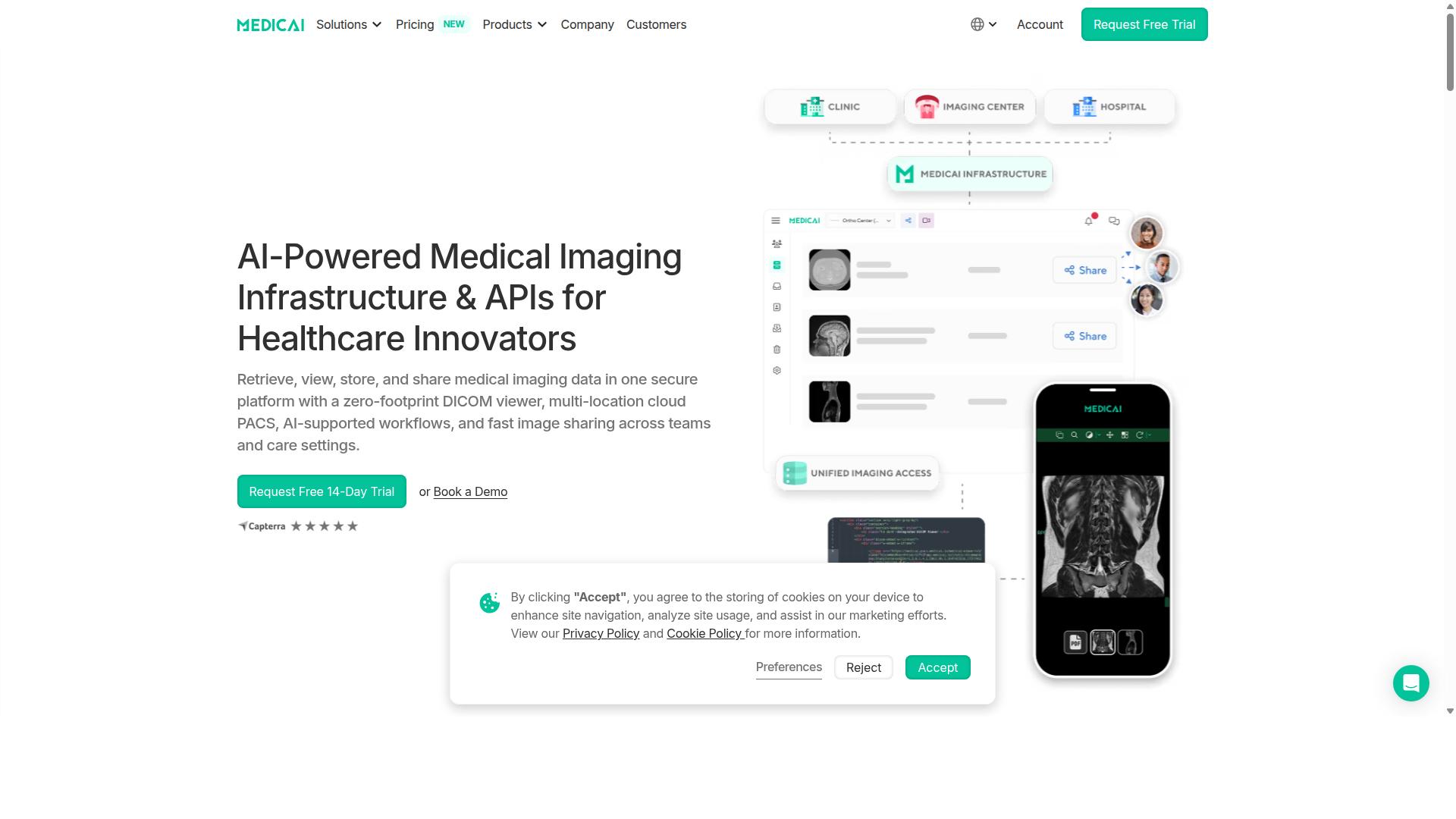
Medicai tops this list because its single secure platform merges cloud storage, zero-footprint viewing, and instant sharing without requiring local installations.
Healthcare teams need DICOM viewers and PACS solutions that deliver fast access across multiple sites. Many alternatives to SonicDICOM still rely on desktop installations that create version conflicts and security gaps.
The platform stands out by keeping all imaging data in one place. Doctors can review studies from any location while IT teams avoid managing separate servers.
Cloud PACS and Zero-Footprint Viewer
Medicai's Cloud PACS and zero-footprint DICOM viewer remove on-premise hardware and VPN requirements by streaming studies directly through any HTML5 browser.
The Vendor Neutral Archive already stores 1.7 M studies. This volume demonstrates how the system scales when hospitals move away from traditional DICOM server setups.
Seventy clinics and hospitals currently use this infrastructure. Ten thousand active doctors access patient imaging without installing additional software on their workstations.
AI-Supported Workflows and Fast Sharing
The platform processes 50 M yearly API transactions. These connections support automated DICOM routing between departments and external partners without manual file transfers.
Partnerships with Rayscape.ai and MD.ai bring additional analysis tools into the workflow. Multi-site teams receive instant share links that maintain HIPAA compliance across different care settings.
Two million imaging studies have been uploaded through this system. The volume shows how the approach handles both routine X-ray viewer needs and complex tumor board requirements.
2. Studycast
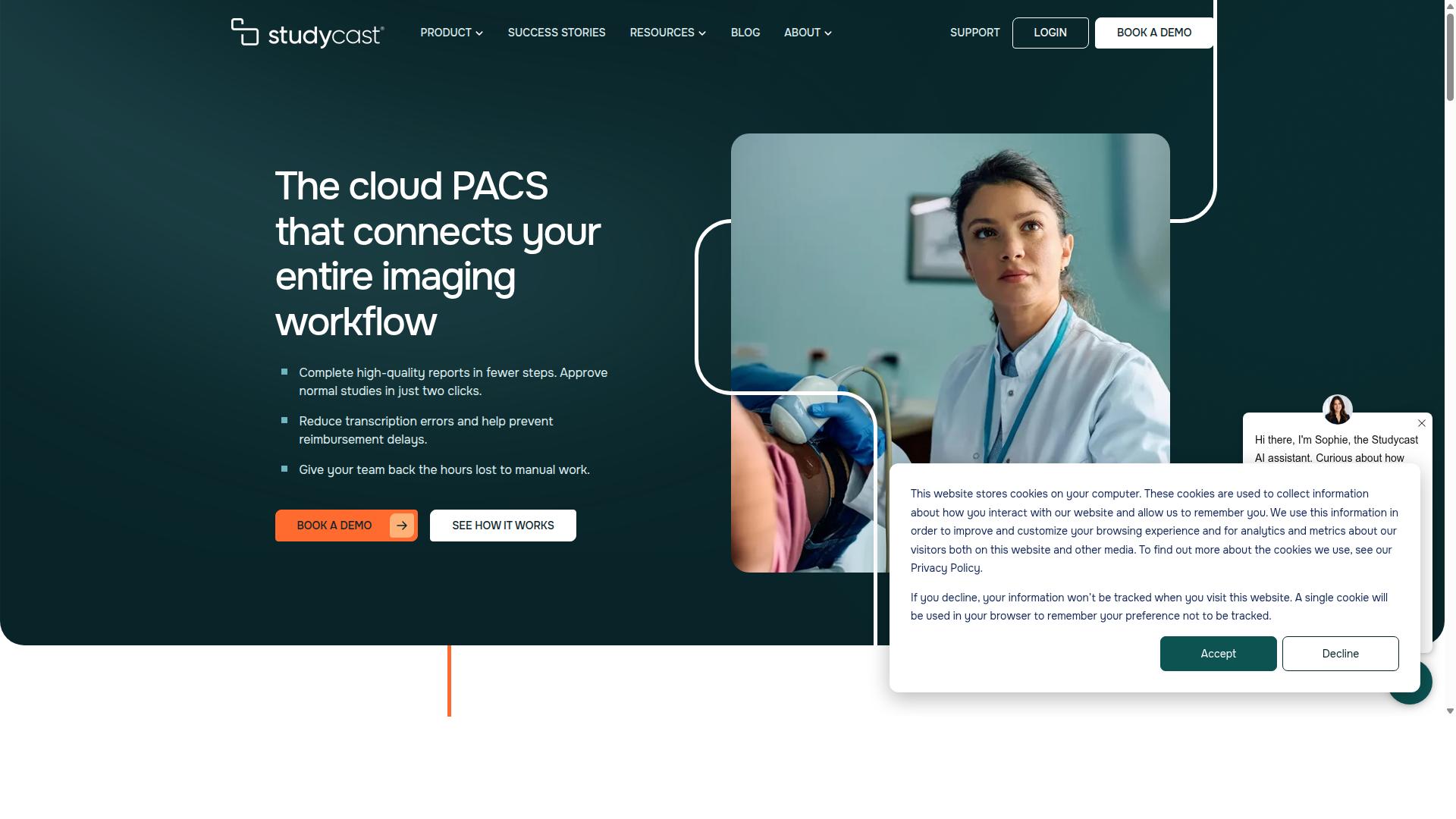
Studycast targets outpatient imaging centers with cloud delivery and a web viewer, although concrete storage limits and API rates are not publicly disclosed. The platform functions as a cloud PACS that handles storage, review, and reporting for ultrasound, nuclear imaging, X-ray, MRI, and additional modalities.
Users benefit from structured reporting and workflow automation that streamlines daily operations. The system supports image sharing across teams and integrates with existing EHR platforms while maintaining HIPAA compliance through secure sharing features.
Specialties served include cardiology, vascular medicine, women's health, point-of-care, and veterinary practices. Both private practices and multi-location enterprises can deploy the solution, along with ambulatory surgery centers and academic research settings.
Physicians, sonographers, administrators, and IT staff interact with the system through standard web browsers. Buyers should request current pricing details and uptime SLAs directly from the vendor before making deployment decisions.
3. Intelerad
Intelerad offers both on-premise and cloud configurations favored by large hospital systems, yet requires longer implementation cycles.
Enterprise-grade scalability allows health networks to expand image sharing across multiple facilities. HL7 integration supports connections with existing electronic health record systems.
Healthcare organizations should verify modality support lists before committing to implementation. Add-on costs often arise during configuration of advanced routing or archive features.
The platform handles DICOM workloads for radiology, cardiology, and pathology departments. Image archive capabilities unify records from various imaging sources.
Staff training becomes essential when transitioning from simpler viewing solutions. DICOM query and retrieve functions require proper network security protocols.
Readers evaluating alternatives to SonicDICOM should compare implementation timelines carefully. Cloud PACS options may reduce hardware maintenance but increase subscription expenses over time.
4. ProtonPACS
ProtonPACS markets a fully managed cloud archive with built-in disaster recovery for smaller radiology groups. The vendor offers a pay-as-you-grow model that scales storage and user seats as imaging volumes increase. Organizations should review multi-year contract terms and exit-data fees before signing.
Key capabilities include centralized image storage, advanced workstations, and integration with RIS and EMR platforms. The platform supports multiple modalities such as MRI, CT, X-ray, and ultrasound imaging. HIPAA compliance and real-time updates help teams maintain efficient radiology workflow.
Users can access 3D reconstruction tools, automated measurements, and AI-assisted features across multiple devices. Worklist automation reduces manual steps when routing studies to the correct radiologist.
Before committing, practices should confirm data portability clauses and review the fee structure for large-scale exports. This step protects future migration flexibility while ensuring the system meets current clinical needs.
5. Ambra Health
Ambra Health provides image exchange plus VNA capabilities with emphasis on teleradiology networks. The platform supports both PACS and vendor-neutral archive functions within a single cloud environment. Organizations that manage multiple imaging sites often use it to move studies between locations without relying on physical media.
Its image-sharing tools include patient-portal access for secure self-service downloads. Patients receive links to view or retrieve their studies, which reduces phone calls and in-person visits. The portal also supports external physician access when referrals require rapid image review.
Role-based permissions let administrators control who can upload, view, or annotate studies. DICOM anonymization tools allow research teams to strip identifying data before sharing datasets with external partners. Remote collaboration features enable radiologists to add measurements and comments directly on the web viewer.
Ambra Health integrates with EHR systems and accepts both DICOM and non-DICOM files such as JPEG or TIFF. This flexibility helps practices that receive outside images in varied formats. Storage and routing options scale with study volume, making the service attractive to multi-site health systems.
Pricing follows a custom model that factors in study counts and feature packages. Pricing tiers and study-volume minimums should be reviewed case-by-case because requirements differ between small clinics and large hospital networks. Organizations should request detailed quotes and compare them against projected annual exam counts before signing agreements.
6. UltraLinq
UltraLinq focuses on ultrasound-heavy practices, offering cloud storage and simple web review. The platform provides remote access to patient reports and images from any internet-connected device. Cardiology PACS capabilities support cardiologists, sonographers, and vascular specialists.
Specialty workflows emphasize OB/GYN and cardiology use cases. Features include mapped reports, three-click customizable worksheets, and post-processing analytics. Practices can apply personalized report branding while maintaining enterprise security standards.
Users at rural clinics, hospitals, and family practices benefit from optional light or dark display modes. Multi-factor authentication and single sign-on protect sensitive medical data. The system handles both healthcare delivery and educational environments.
Cross-modality support may become relevant as CT scan or MRI viewer volumes increase. Organizations should verify compatibility with additional DICOM modality types before expanding imaging services. Some practices combine ultrasound imaging with other modalities to streamline radiology workflow.
7. Agfa HealthCare
Agfa HealthCare supplies enterprise PACS with strong on-premise options for institutions needing full data control. The platform brings together imaging archives and clinical tools under one standards-based system. Hospitals often choose this route when they need predictable uptime and direct oversight of every study.
Its legacy integration track record spans radiology, cardiology, and digital pathology departments. Many sites have kept the same core infrastructure running for years while adding new modalities. This continuity helps teams avoid repeated migrations and retraining cycles.
Hybrid-cloud extensions appear through flexible deployment models that pair local servers with cloud services. Organizations can start with on-site storage and later shift select workloads outward. Configuration choices depend on local network capacity and regulatory requirements.
Deployment timelines and maintenance fees vary widely across regions and contract scope. Some facilities complete rollout in months while others need extended validation periods. Budget planning should include both initial setup and ongoing service terms.
How to Choose the Right Option
First sentence: Match platform limits to your annual study volume, modality mix, and multi-location access needs before committing. Different platforms handle these variables in distinct ways.
The table below shows three factors that directly affect daily operations. Fill in your own figures so the numbers reflect your actual workload.
| Factor | Your Current Value | Platform A | Platform B | Platform C |
|---|---|---|---|---|
| Entry storage (GB) | ||||
| Connected locations | ||||
| Zero-footprint access |
Storage limits shape which modalities you can keep online. Low entry capacity may force offloading CT scans and MRI studies to external archives.
Multiple connected locations require reliable DICOM routing and query-retrieve capabilities. A single site with one DICOM workstation rarely needs this level of traffic management.
Zero-footprint viewers eliminate desktop installs for referring physicians. This approach reduces support tickets and speeds up image review across departments.
Once the rows contain your figures, compare them against each alternative's published limits. The option that meets all three criteria without added modules becomes the practical choice for your radiology workflow.
Final Verdict
For teams that need scalable cloud storage, zero-footprint access, and measurable throughput, Medicai delivers the clearest balance of features and transparent limits.
1M studies processed yearly, 1.7M studies in storage, and 300k visualizations completed last year show consistent performance across real clinical environments. These numbers reflect daily use by 10,000 active doctors and 70 clinics and hospitals on the platform.
Microsoft Azure partnership and HIPAA and GDPR compliance meet regulatory requirements without added overhead. 50M yearly API transactions demonstrate that the system handles high-volume DICOM query, DICOM retrieve, and DICOM store operations reliably.
Teams evaluating SonicDICOM alternatives can schedule a live demo to compare their current workflow metrics against these benchmarks. Direct comparison of study volume, visualization counts, and diagnosis time reductions provides concrete data for decision making.
Recommended Resources: